



Príncipe Felipe Auditorium
The Príncipe Felipe Auditorium and Conference Centre is one of Oviedo’s main cultural and conference venues. Opened in 1999, the building incorporates part of the city’s historic water reservoirs into its structure.
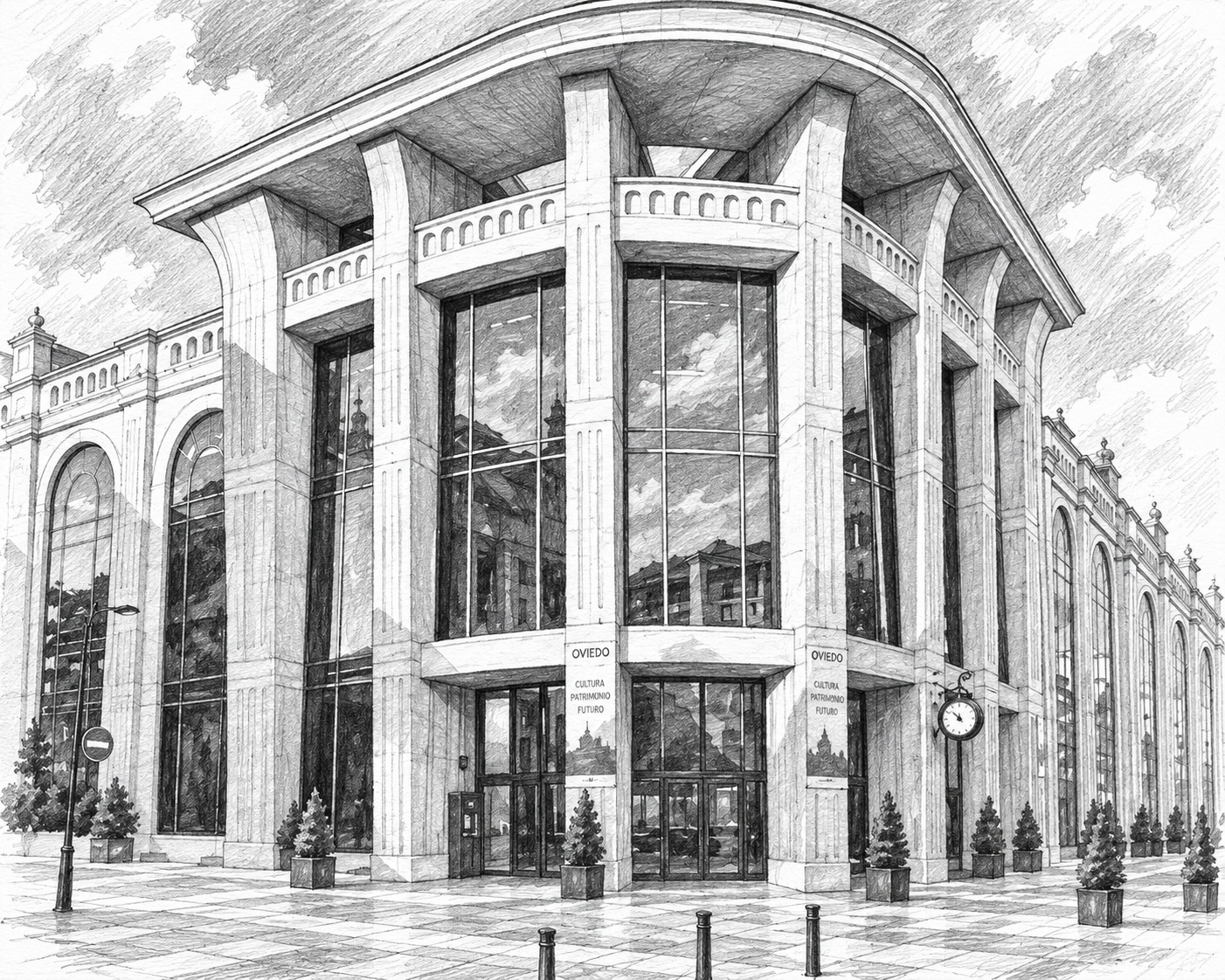
Príncipe Felipe Auditorium and Conference Centre · Oviedo
A major new cultural venue
El Auditorio-Palacio de Congresos Príncipe Felipe se inauguró el 29 April 1999 y se convirtió en uno de los principales equipamientos culturales y congresuales de Oviedo. El proyecto fue desarrollado por el arquitecto Rafael Beca durante la década de 1990.
The building was conceived with a dual purpose: to provide a large hall for concerts and performances while also offering spaces suitable for congresses, conferences and professional meetings.
Built above an 1846 water reservoir
The site had been occupied by the Pérez de la Sala water reservoirs, an essential part of Oviedo’s water supply infrastructure from the mid-19th century.
Rafael Beca incorporated part of these hydraulic structures into the new auditorium. On the lower levels, the arches and vaults of the old reservoir can still be seen, creating a distinctive meeting point between 19th-century engineering and late-20th-century cultural architecture.
The memory of water is also reflected in the exterior design, with fountains and glazed surfaces accompanying the façades.
Rafael Beca and classically inspired architecture
The exterior deliberately moves away from a technological or entirely abstract architectural language. Instead, the building uses a monumental, classically inspired composition reinterpreted through contemporary materials and solutions.
Large glazed surfaces contrast with the architectural concrete elements and allow the interior spaces to maintain a strong visual connection with the outside.
The complex occupies a footprint of around 4,500 square metres and has approximately 18,500 square metres of total built floor area.
A flexible main hall
One of the project’s main features is its versatility. The main auditorium and the multipurpose hall can be used independently or connected, allowing the capacity and configuration of the space to be substantially altered.
The main auditorium has around 1,500 seats. Beneath the multipurpose hall is the Chamber Hall, while the upper levels contain several rooms for conferences and meetings.
Carefully designed acoustics
Acoustics were a fundamental aspect of the project. The acoustic design was entrusted to specialist Higini Arau, who has worked on numerous concert halls and theatres.
The main auditorium was designed to accommodate both symphonic music and other performing arts. The timber finishes and the treatment of the walls, ceiling and stage form part of an acoustic concept integrated into the architecture itself.
The OSPA and Oviedo’s musical life
Since its opening, the auditorium has been home to the Symphony Orchestra of the Principality of Asturias (OSPA) and has become one of the city’s principal venues for musical performances.
It also hosts the annual concert associated with the Princess of Asturias Awards, as well as symphonic seasons, chamber music, congresses, exhibitions, conferences and other cultural events.
The 1999 opening
El edificio fue inaugurado el 29 April 1999 con un concierto de la Orquesta Sinfónica del Principado de Asturias y el Coro de la Fundación Príncipe de Asturias, dirigidos por Maximiano Valdés.
The programme began with the première of Asturias desde la distancia, an overture commissioned for the occasion from Oviedo-born composer Jorge Muñiz, followed by works by Mozart and Beethoven.
Desde entonces el Príncipe Felipe Auditorium forma parte esencial de la actividad musical y congresual de Oviedo.
Location and visit
Address: Plaza del Fresno, s/n · 33007 Oviedo.
Current use: auditorium, concerts, congresses and cultural activities.
Access: the interior is accessible during concerts, congresses and other scheduled events.
Of special interest: in addition to the halls, note the integration of the arches and vaults belonging to the former 1846 water reservoir.