Wamba
It is the oldest and best-known bell in the group. Cast for the Romanesque tower, it remains in use today. Its deep sound forms part of the Cathedral’s distinctive soundscape.


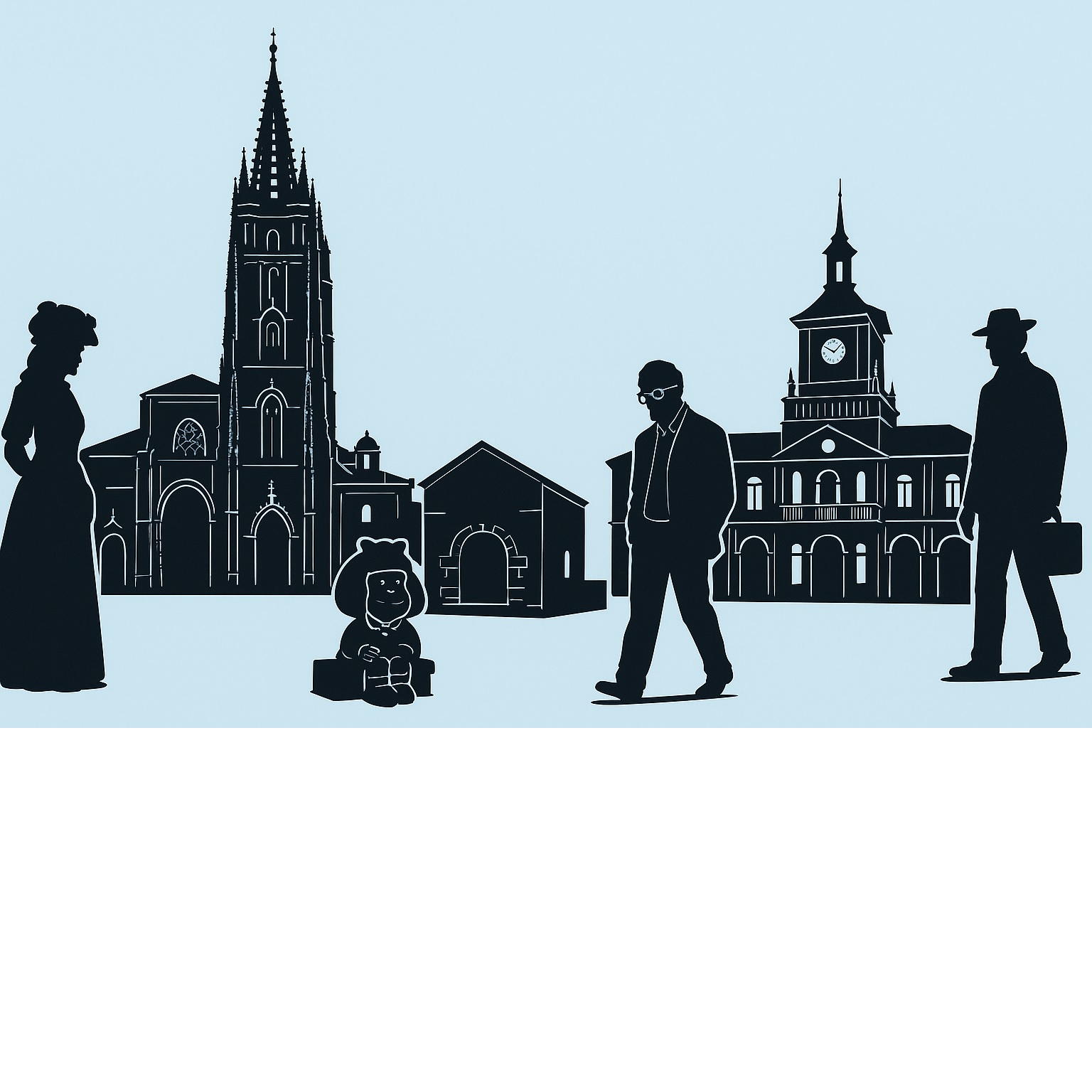
The Gothic tower of the Cathedral of San Salvador houses a set of seven bells from different periods. Among them, Wamba, cast in 1219 and regarded as the oldest bell still in active use in Europe, is particularly noteworthy. The bell chamber also preserves much of its historic equipment and is one of the most distinctive features of Oviedo Cathedral.
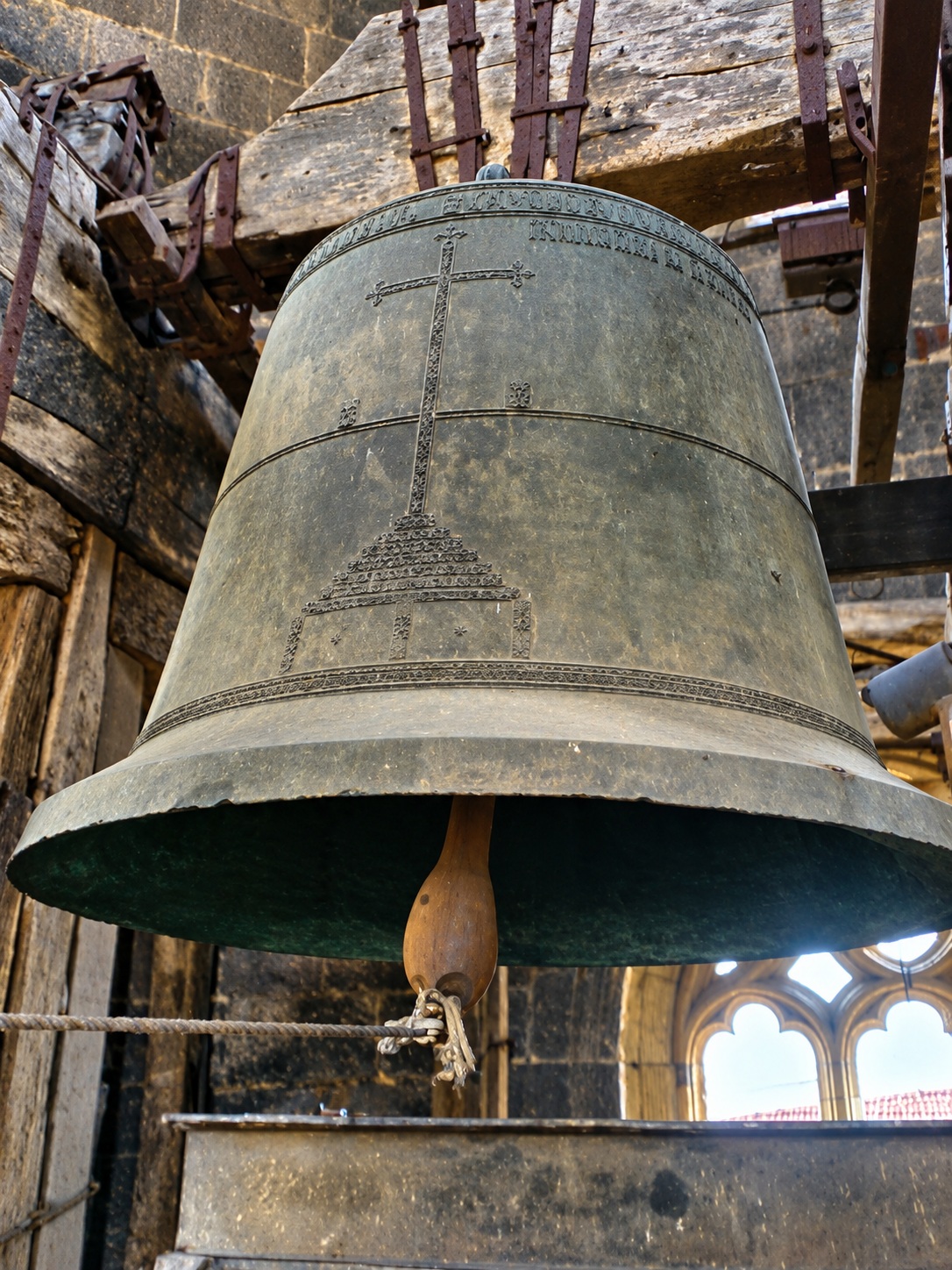
Wamba was cast in 1219 for the former Romanesque tower. It measures approximately 130 centimetres in diameter, 105 centimetres in height and has an estimated weight of 833 kilograms.
Its importance is not due solely to its age. Oviedo Cathedral considers it the oldest bell still in active use in Europe. It remains part of the cathedral’s liturgical life and rings fifteen minutes before each Mass.
The bell preserves medieval inscriptions in Latin and Greek. One of them records that it was commissioned by Canon Pedro Pelayo Cabeza in honour of the Most Holy Saviour.
The present set comprises bells cast between the 13th and 19th centuries. Each had different functions in the religious and everyday life of the Cathedral.
It is the oldest and best-known bell in the group. Cast for the Romanesque tower, it remains in use today. Its deep sound forms part of the Cathedral’s distinctive soundscape.
It is the largest and heaviest bell in the Cathedral. Its inscription recalls some of the traditional functions of bells: summoning the people and clergy, mourning the dead and marking feast days with solemnity.
A 17th-century bell that retains its historic mounting. It has a large crack that has affected its sound.
It was cast by José de Venero. Traditionally, it was used to summon the cathedral chapter each day and announce the beginning of services. It has also been associated with the striking of the clock.
One of the smaller bells in the group. Its inscription invokes Jesus, Mary and Joseph and asks for the intercession of Saint Barbara.
A small bell cast in the 19th century. It preserves a simple inscription dedicated to Jesus, Mary and Joseph.
The most recent of the seven. It was recast by José de Sota in 1893 and bears religious decorative elements together with the founder’s mark.
| Bell | Year | Diameter | Approx. weight |
|---|---|---|---|
| Wamba | 1219 | 130 cm | 833 kg |
| Santa Cruz | 1539 | 154 cm | 1.384 kg |
| Esquilón | 1678 | 94 cm | 481 kg |
| De Posar | 1817 | 78 cm | 275 kg |
| Santa Bárbara | 1818 | 66 cm | 166 kg |
| First Timbal | 1830 | 54 cm | 91 kg |
| Second Timbal | 1893 | 52 cm | 81 kg |
The bells were not merely liturgical instruments. For centuries they marked the rhythm of city life: they summoned people to religious services, announced celebrations and funerals, and could warn of extraordinary events.
The bell chamber preserves much of its historic equipment. In many cases, the bell yokes and iron fittings are older than the bells themselves. Around 1970, a basic electrification system using electric hammers was installed while seeking to preserve the original fittings.
The tower also houses the historic clock mechanism. Visitors can see both the bell chamber and the mechanisms used to measure and signal the passage of time.
The bells can be seen during the guided tour of the Gothic Tower. The ascent is made in several stages, one of which stops in the bell chamber itself.
The ascent continues to the Renaissance section, which offers extensive views over Oviedo. The tower visit is separate from the general visit to the cathedral complex.
Datos históricos y técnicos contrastados con información de la Oviedo Cathedral y fuentes eclesiásticas asturianas.